
2026's Extension Trends — and Which Ones Are Actually Worth the Money
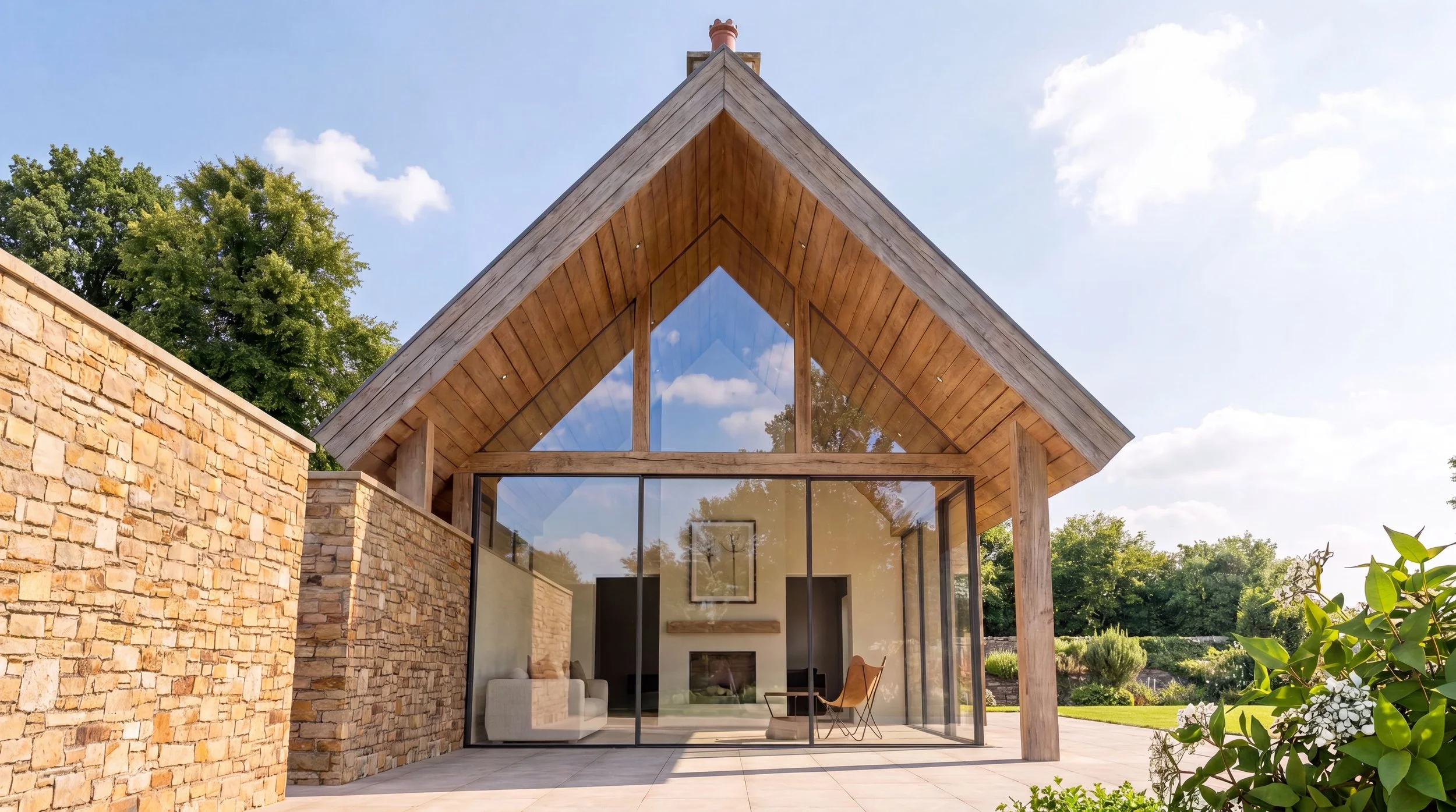
Sustainable materials, indoor-outdoor living and biophilic design top most trend reports for 2026 — but not every trend earns its place in a high-end extension, and value doesn't always follow fashion. Here's what's genuinely shaping extension design this year, and an honest view on which of it is worth spending on.
What's Actually Trending in 2026
A few themes show up consistently across this year's design reporting, and they're consistent with what we're seeing asked for directly:
Indoor-outdoor living. Extensions increasingly treat the boundary between inside and out as something to dissolve rather than mark — large-format sliding or pivoting glazing, covered outdoor kitchens and dining areas, and gardens designed as a continuation of the plan rather than a view from it.
Biophilic and tactile natural materials. Timber, stone, limewash and living walls are replacing the harder, more clinical minimalism of the last decade. The aim isn't decoration — it's a considered response to how natural materials age, feel and settle into a site over time.
Multi-functional, flexible space. A single-use extension is increasingly seen as a missed opportunity. A garden room that's also a functioning home office, a snug that converts to a guest space, movable partitions that let a plan adapt as a household's needs change — flexibility is being designed in from the outset rather than retrofitted later.
Wellness spaces. Home saunas, steam rooms and quiet, screened-off spaces for genuine downtime have moved from aspirational extra to a fairly standard brief item on higher-end projects.
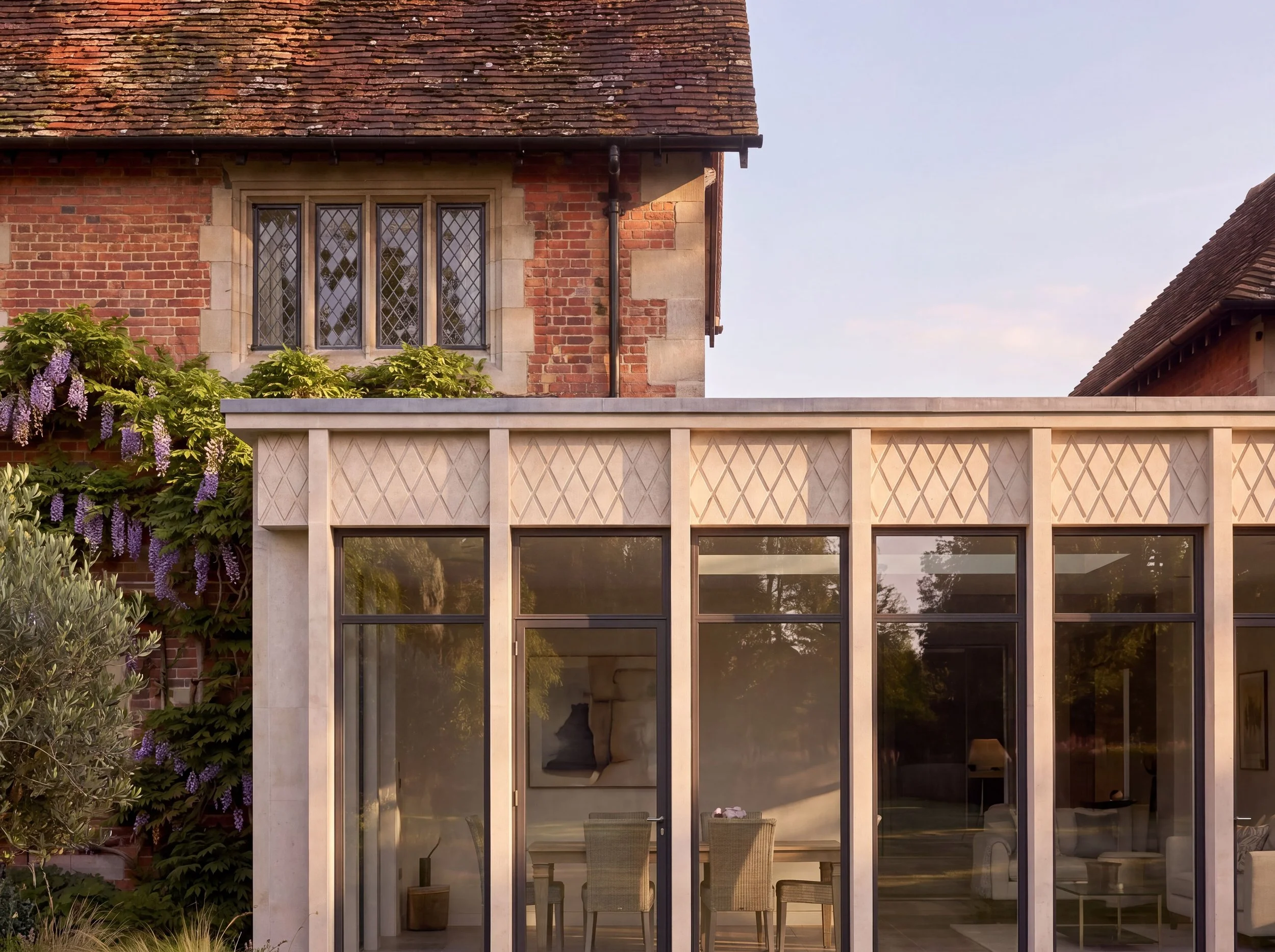
"Old bones, new life." Particularly relevant to Derbyshire's period housing stock: rather than replacing character, the strongest projects are extending it — a confidently contemporary addition that respects a period building without imitating it, and often reads as more valuable, not less, for the contrast.
Which of These Are Actually Worth the Investment
Trend reporting rarely distinguishes between what looks good in a photograph and what holds its value — so here's a more opinionated read.
Worth it: genuinely improving natural light and the indoor-outdoor connection. This consistently ranks among the best returns available on an extension, in both resale value and daily quality of life. It's rarely the cheapest option on a spec list, but it's the one that changes how a house actually feels to live in, which is a large part of why it holds value.
Worth it: extending rather than replacing character on a period home. A contemporary, well-detailed extension that respects an existing building's proportions and materials — without pastiche — tends to be judged well by both future buyers and conservation officers, and increasingly reads as the sophisticated choice rather than the safe one.
Worth it: performance-led sustainable design, not just sustainable-looking materials. Natural materials photograph well, but the sustainability choices that actually matter over a building's lifetime — fabric-first insulation, airtightness, and genuinely passive design principles — are mostly invisible once the plaster's on. A trend-led material palette and a genuinely low-energy building aren't the same thing, and a good brief pursues both rather than assuming one implies the other.
Worth it, if genuinely used: a well-placed wellness space. These add real quality of life where a household will actually use them regularly. They're a weaker bet purely as a resale feature for a general buyer, so the calculation is different depending on whether you're building for yourself or for eventual sale.
Worth questioning: highly specific, single-use spaces. A dedicated wine cellar, an elaborate boot room, or an extension organised entirely around one niche use can be wonderful to live with — but they're the first thing a value-driven appraisal discounts, because they only appeal to a buyer who shares the same specific interest. If resale value matters to the brief, these work best as a flexible secondary use of a space, not its entire justification.
Worth questioning: chasing a very specific aesthetic trend. Dark, moody interiors and highly saturated colour schemes photograph beautifully and can be genuinely wonderful to live in — but as a general rule, the more tightly a space is designed around a current aesthetic, the faster it can start to feel dated, and the more it narrows the pool of buyers who can picture themselves in it. None of that is a reason to avoid bold choices; it's a reason to make them consciously, with open eyes about the trade-off.
The Broader Point
Trend lists are a reasonable starting point for a conversation… but a poor substitute for a brief built around how a specific household actually lives. The extensions that hold their value — financially and otherwise — tend to be the ones designed from that starting point outward, using current trends as inspiration material rather than as the destination.
Frequently Asked Questions
What extension features add the most resale value in 2026?
Improvements to natural light and indoor-outdoor connection, well-executed loft conversions, and thoughtful extensions that respect a property's character tend to perform best. Widely cited industry estimates put well-executed loft conversions and kitchen-focused extensions among the strongest returns, often increasing property value by an additional 100% of the build cost when done well, though returns vary significantly by local market and shouldn't be taken as guaranteed figures for any specific property.
Are highly personalised features like wine cellars or home cinemas a bad investment?
Not necessarily for your own enjoyment, but they typically add less resale value than more universally useful space, since they only appeal to buyers who share that specific interest. They tend to work best designed as a flexible secondary use rather than a space's sole purpose. However, geography plays a big part — cinema rooms and pools are very popular in some locations and in certain house types.
Is it worth extending a period home rather than buying a new-build?
For many buyers, yes — a well-executed extension that respects a period building's charm, can add both character and value that a comparable new-build typically can't replicate, particularly in areas like Derbyshire with strong existing period housing stock.
Do dark, trend-led interiors hurt resale value?
Not inherently, but strongly of-the-moment aesthetic choices can narrow the pool of buyers who can picture themselves in a space, and may read as dated sooner than more considered, timeless design choices.
Curious which of these would actually suit your house, rather than just the trend pages? We’d love to talk to you about it.