
Building in Jersey: A Mainland Practice’s Guide to Island Planning
Jersey is a independent jurisdiction with its own planning law, its own housing rules, its own charm and its own rhythm — and understanding that difference before you buy a site or commission a design is worth more than almost anything else you'll read about the process. Here's what actually matters.
Jersey Is Not Part of the UK Planning System
It's an easy assumption to make, and an important one to correct early: Jersey is a Crown Dependency, not part of the United Kingdom, and it runs its own planning and building control regime entirely separate from English planning law. There's no Town and Country Planning Act, no NPPF, no Future Homes Standard. Instead, development is governed by Jersey's own Island Plan and administered by the States of Jersey's Planning and Building Services.
That matters practically: precedents, policy documents and even the vocabulary used in a UK planning application don't transfer directly. A practice who has only ever worked within the English system is starting from the same point as a client on this one.
How the Process Actually Works
Jersey's process runs in two distinct phases, handled by two different teams. First comes the planning phase, where planning officers assess a proposal against the Island Plan — design, context, sustainability, and how the scheme sits in its surroundings — and negotiate any conditions directly with the applicant and their architect/agent. Once planning permission is granted, the project moves to a separate Building Standards phase, where a different team checks technical compliance against Jersey's own suite of technical guidance documents covering structure, fire safety, energy performance etc.
The island's planning service has been actively working to speed this up, and reports granting permission in the region of nine applications out of ten, with early, direct conversation between applicant, architect and planning officer treated as normal practice rather than an exception. Pre-application discussion is genuinely useful here: on an island this size, planning officers know the sites, the context and often the history of a plot in a way that's harder to replicate on the mainland, and starting that conversation early tends to pay off.
The Property Market Has Its Own Rules, Too
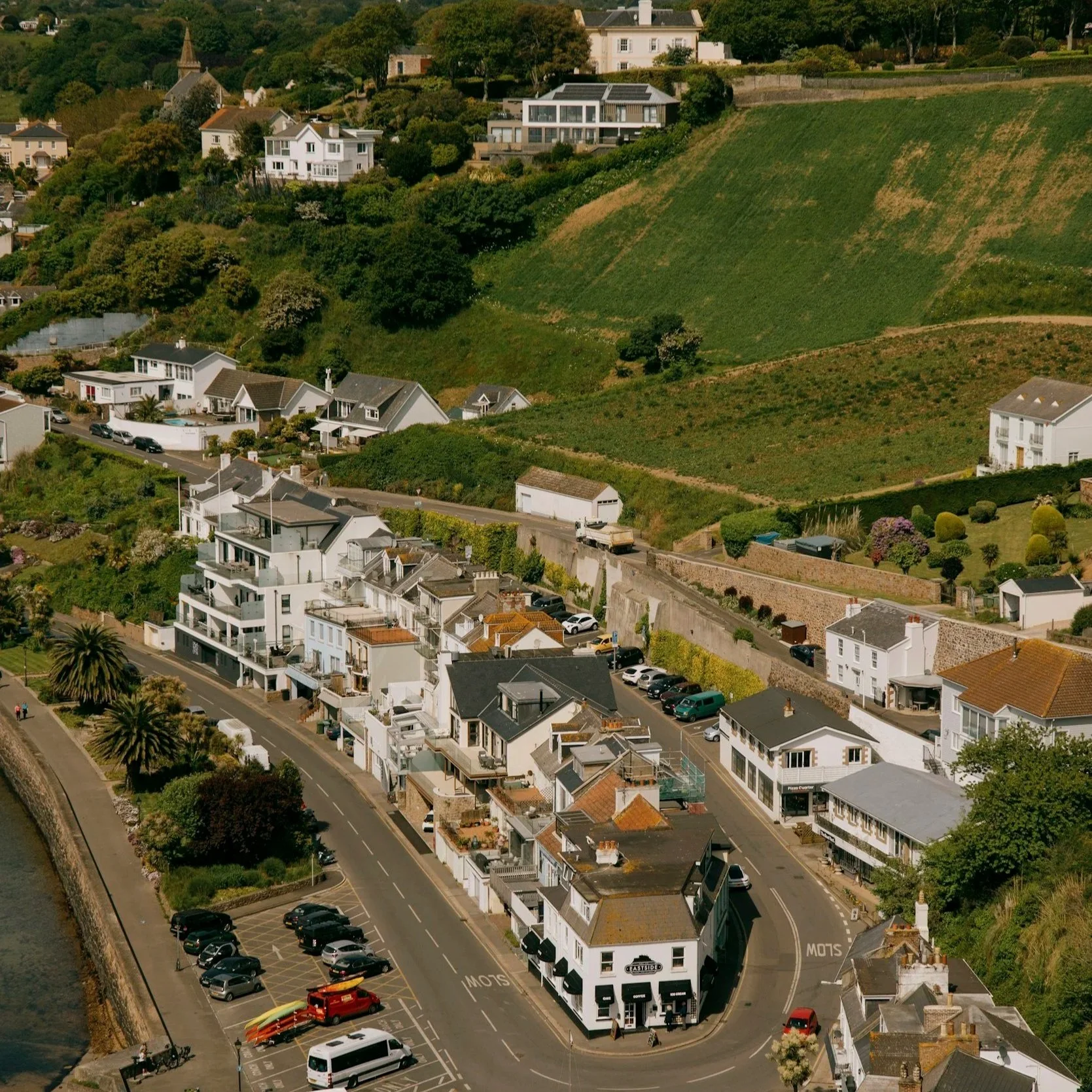
Jersey's residential property market operates on a qualification system that has no real mainland equivalent. Broadly, housing is split between properties anyone can buy — commonly referred to as the open market — and a larger stock of housing restricted to people who meet Jersey's residency or employment qualifications. Because the open-market segment is a genuinely limited slice of the island's total housing stock, on a finite island with fixed geography, it tends to command a significant premium — part of why Jersey's high-end residential market behaves more like a rarefied international market than a regional UK one. This is a specialist and genuinely complex area of Jersey law, and anyone considering a purchase should get dedicated legal advice on housing qualification status before committing to a site — it's not something to infer from a listing.
Designing With Jersey's Landscape, Not Against It
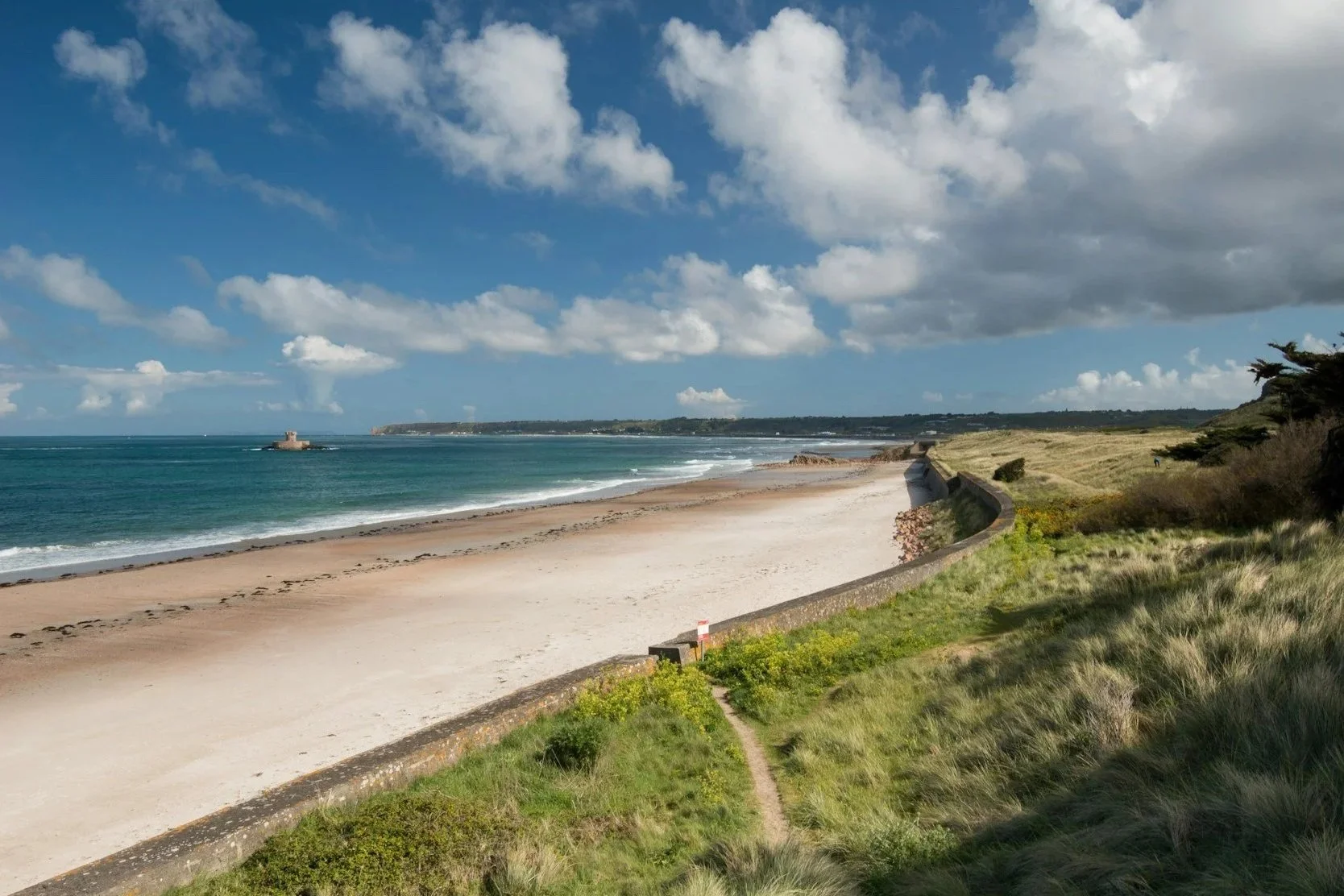
Jersey's built vernacular is distinctive for reasons worth understanding rather than working around: granite farmhouses tucked into folds in the land, a coastline that shapes almost every significant site, and a landscape that's simultaneously intimate — the island is only a few miles across — and dramatic, with some of the largest tidal ranges in the world redrawing the coastline twice a day. A high-end home here earns its place by responding to that context specifically, rather than importing a design language that would sit just as comfortably in Surrey or the Cotswolds. That's less a stylistic preference than a straightforward extension of our own wider principle: good architecture understands where it is, before it decides what it wants to say.

What Building on an Island Actually Changes
Beyond planning and property law, the physical reality of building on an island shapes a project in ways worth planning for from day one. Materials, plant and specialist trades that are routine on the mainland often need to be shipped or flown in, which affects both cost and programme — lead times deserve more padding than a mainland project of similar scale, and it's worth having material and specification decisions made earlier rather than later to protect the build programme. None of this makes a high-end project in Jersey harder to deliver; it just rewards a design and delivery team that plans for it explicitly, rather than assuming the island works exactly the same as anywhere else.
Why a Mainland-Trained Eye Can Help
None of this is a case against working with an off-island architectural practice — quite the opposite in fact. A practice with a strong technical and design grounding on the mainland, paired with genuine respect for how differently Jersey's system works, brings something useful: design ambition that isn't parochial, combined with the humility to do the local homework properly rather than assume it transfers. That combination — mainland design rigour and flare, island-specific process knowledge, and a willingness to work closely with local agents, contractors and planning officers — is really what a Jersey client should be looking for, wherever their chosen practice happens to be based.
Frequently Asked Questions
Is Jersey's planning system the same as the UK's?
No. Jersey is a Crown Dependency with its own planning law, its own Island Plan, and its own Planning and Building Services — separate from English planning legislation entirely.
How long does planning permission typically take in Jersey?
Jersey's planning service has reported granting permission in around 90% of cases, with an emphasis on early pre-application conversation between applicant, agent and planning officer to keep schemes moving efficiently.
Can anyone buy property in Jersey?
Not on the same terms. Jersey operates a housing qualification system, and only a limited proportion of the island's housing stock — broadly, open-market property — is available to buyers without a Jersey residency or employment qualification. This is a specialist legal area and worth dedicated advice before committing to a site.
Does building in Jersey cost more than on the mainland?
Typically yes, to some degree — materials, plant and specialist trades often need to be shipped or flown to the island, which affects both cost and programme. Building this into the plan early, rather than discovering it mid-project, makes a significant practical difference.
Do I need an architect based in Jersey?
Not at all. What matters more is a practice that combines strong design and technical grounding with a genuine, hands-on understanding of Jersey's planning process, property law and construction logistics. A fresh
If you're exploring a project in Jersey, we want to hear from you — the earlier in the process, the more useful we can be.