
If you own, or hope to buy, a listed building or a property in a listed place in Jersey, the direct answer is this: you will need permission — called listed building consent — for almost anything beyond the most trivial repair, and the centrepiece of that application will be a Heritage Impact Statement explaining, in detail, what you want to do and why it won't harm what makes the building significant. Permission costs nothing in itself, but it is not quick, and it is not optional. What follows is what that actually means in practice, for the kind of considered renovation or extension a listed Jersey home usually deserves.

What Counts as a Listed Building or Place in Jersey?
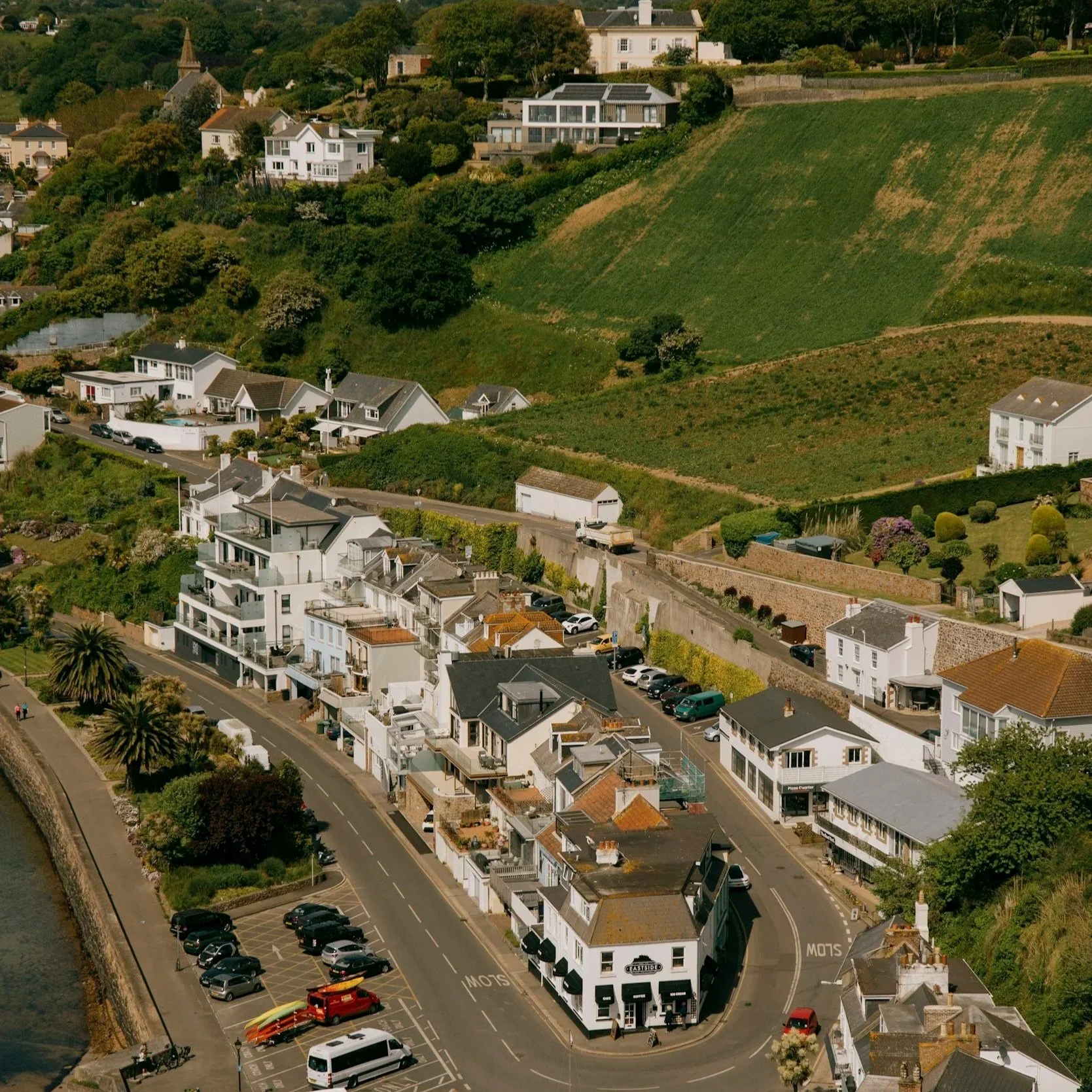
Jersey protects buildings, places and conservation areas for their historical, architectural, archaeological, artistic or cultural importance. Every listed building or place carries its own statement of significance as part of the listing schedule — a short account of precisely why it matters, which is worth reading before you plan anything, since it tells you what an inspector will be weighing your proposal against. The Island's historic buildings map lets you check a property's status before you fall in love with it, which is worth doing at the viewing stage, not after the offer is accepted.
It is also worth knowing that a listing doesn't only protect four walls and a roof. A "listed place" can cover grounds, garden walls, and the relationship between a building and the land around it — which matters enormously if your interest in a property is as much about its setting as the building itself.
Do I Always Need Permission?
Not for literally everything — but close to it. Whether you need consent depends on the building's grade and the scale of what you're proposing, so a very minor like-for-like repair may fall outside the net. But as a working rule: you will always need permission to change a material, alter an external door or window, add a structure of any kind, or carry out building works proper. If you are weighing up a repair against a replacement, or a repaint against a repoint, that is exactly the point at which to ask first rather than act first.
What Features Are Actually Protected?
This is where a surprising number of applications come unstuck — not because someone tried to do something dramatic, but because they didn't realise a small, ordinary-looking feature was the thing doing most of the historic work.
Internally, protection typically extends to staircases and other joinery, fireplace surrounds, doors and panelling, shutters, structural timber, decorative plasterwork, ironwork, integral stonework, and — for the Island's older stock — a distinctive plan form dating from before 1850. A pre-1850 layout is itself a kind of evidence: the way rooms were arranged tells a story about how the building was used, long before anyone thought to write it down.
Externally, the list runs to traditional windows and doors, gutters, downpipes and fascia boards, slate or tile roofing and chimneys, masonry and pointing, render, and the smaller decorative features — ventilation grilles, ornamental metalwork, garden walls and railings — that rarely make it into a sales brochure but very much make it into a conservation officer's assessment.
What Is a Heritage Impact Statement, and Do I Actually Need One?
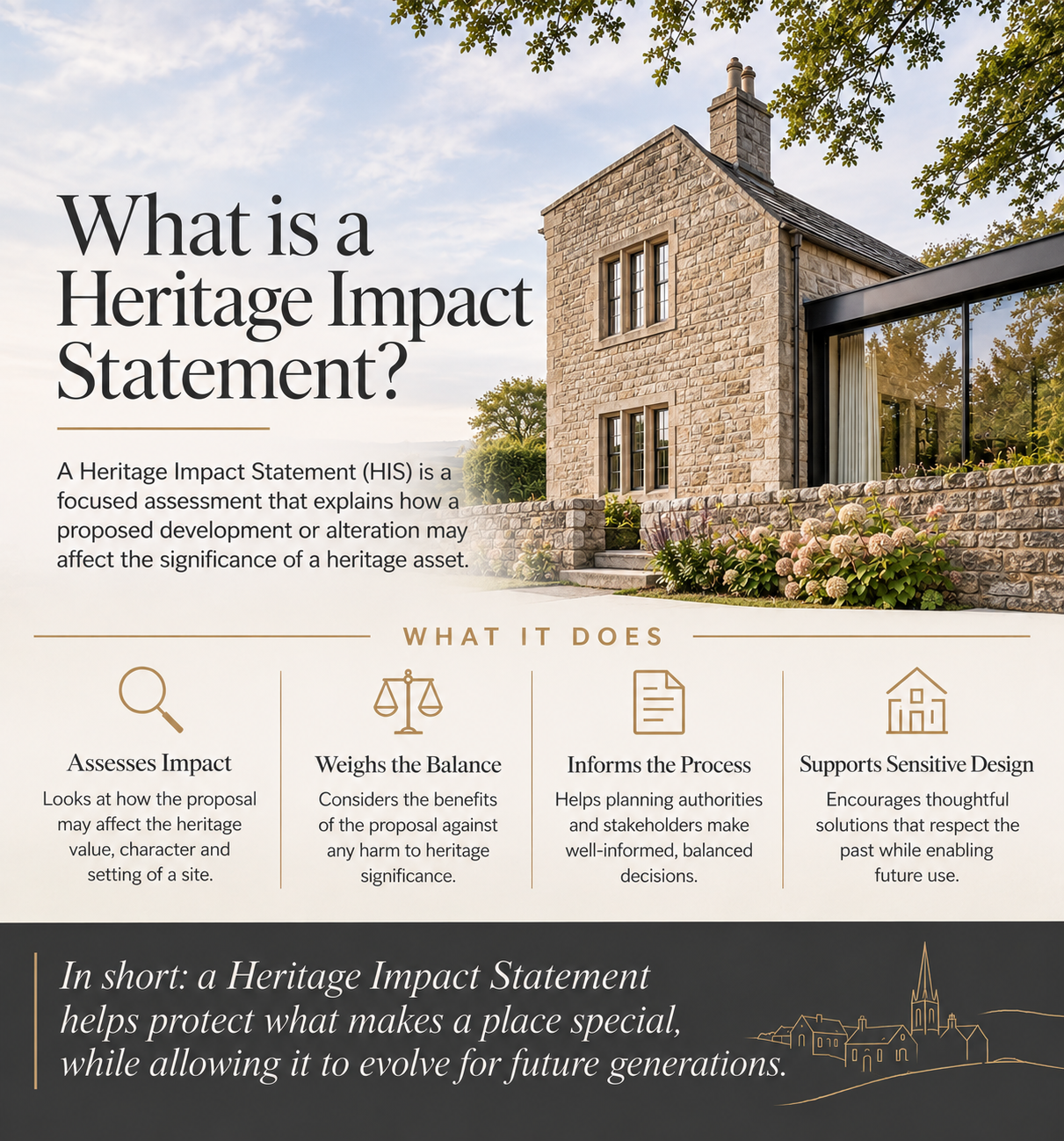
For any work that could affect a listed building, an archaeological site, a conservation area, or any of their settings, Jersey requires a Heritage Impact Statement alongside the planning application. In essence, it is the document that makes your case: what you want to change, what is there now, and why your proposal respects — or better still, reveals — what matters about the building.
For genuinely minor changes, gov.je provides a template that you can complete yourself. For anything more ambitious — a reconfigured ground floor, a rear extension, a change of use — it is worth treating the Heritage Impact Statement as a piece of design thinking in its own right, not paperwork bolted on afterwards. A statement written after the design is finished tends to read like a justification. A statement written alongside the design tends to read like an argument, and arguments are what persuade a case officer.
Can I Just Replace My Windows?
Not simply because they're draughty, no. If you want to replace a window or door in a listed building, your Heritage Impact Statement needs to set out the likely age and condition of each one, photographic evidence, a clear justification for why repair isn't a realistic option, and scaled drawings — 1:20 for the elevations, 1:5 for the joinery detail — showing exactly how the new window or door will open and sit. This is more demanding than most people expect walking in, and it is precisely the kind of drawing package that benefits from being produced by someone used to making the case for historic fabric, rather than assembled at the last minute to satisfy a checklist.
Does "Setting" Really Matter If No One Can See My House From the Road?
Yes — and this catches people out more than almost anything else. The contribution a building's setting makes to its significance does not depend on whether the public can see it. Setting can extend well beyond the property boundary into the wider landscape or townscape around it. A hedge, a view, a historic field pattern, or a neighbouring building's relationship to yours can all be part of what you're asking permission to change, even if your actual building work is confined entirely within your own walls.
Will I Need an Archaeologist?
If your property is a listed place, or sits within an area of archaeological potential, yes — a desk-based assessment carried out by an archaeologist is a requirement, not a possibility to be weighed up later. That assessment may in turn recommend further investigation once work begins, particularly for groundworks. It is far better to build this into your programme and budget from the outset than to discover it mid-project, when it has the greatest power to delay you.
What Does It Actually Cost?
Less than people assume, and then usually more than they hoped. Listed building consent itself carries no fee — it sits in Jersey's fee schedule as a zero-cost item precisely because permission is needed only by virtue of the listing. But if your proposal also involves new floor area, an alteration, or a changed window or door opening, those elements are charged in the ordinary way: broadly, new floor area is charged per square metre (so a modest 30 sqm extension and a more generous 50 sqm extension sit at noticeably different points on the scale), an alteration that doesn't add floor area carries its own flat charge per building, and each altered window or door opening is charged individually. None of this is disclosed upfront as a single number — it depends entirely on what you're proposing — so it is worth costing properly before you commit to a scheme, rather than discovering the fee total alongside the rest of your build costs.

What Happens If I'm Refused — or If I Start Work Without Permission?
If an application for listed building consent is refused, you have 28 days from the date of the decision notice to lodge an appeal with the Tribunal Service, along with the appeal fee. An independent Inspector reviews the case — usually including a site visit — and makes a recommendation to the Minister for the Environment, who takes the final decision and must give reasons for departing from the Inspector's view if they choose to. It is not a fast process: once registered, all parties have 28 days to submit their full case, with a further 14 days for responses, before the appeal proceeds by written representations or a hearing.
Starting work without consent is a different matter entirely, and a riskier one. Unlike an ordinary planning breach, unauthorised work to a listed building or place cannot simply be regularised after the fact in the way other development sometimes can — which is precisely why asking first, however small the change feels, is almost always the cheaper and calmer route.
How Does This Compare to the Mainland?
Closer than you might expect, in one respect. In England, listed building consent is also free of charge in its own right — but exactly as in Jersey, any accompanying planning permission for new floor area or altered openings still carries the usual fee. The two systems part ways more in texture than in principle: Jersey's walk-in duty-planning-officer service for homeowners and small businesses, and its free written pre-application advice for larger schemes, offer a notably direct, human-scale route to guidance before you commit to drawings — a contrast to the more variable, sometimes charged, pre-application arrangements you'll find across different English local authorities. For a client weighing a Derbyshire listed property against a Jersey one, the real difference is less about cost and more about who you can actually sit down with before you start.
Frequently Asked Questions
Do I need permission to change the windows in my listed Jersey home?
Almost certainly, yes. Window and door changes are one of the areas Jersey's planning rules treat most carefully, requiring evidence of the window's age and condition, a clear justification for replacement over repair, and scaled drawings of the proposed new joinery.
What is a Heritage Impact Statement?
It's the document, submitted with your planning application, that explains what you want to change about a listed building or place and why your proposal won't harm what makes it significant. Minor works can use a self-completed template; more substantial projects benefit from a properly considered one.
Does listed building consent cost anything in Jersey?
The consent itself is free. Any linked development — new floor area, an alteration, or a changed window or door opening — is charged under Jersey's ordinary planning fee schedule.
Can I appeal if my listed building consent is refused?
Yes, within 28 days of the decision notice, to the Tribunal Service. An independent Inspector reviews the case and recommends a decision to the Minister for the Environment, who decides.
Is Jersey's process very different from the UK mainland?
Less than people assume. Both waive the fee for listed building consent itself and both still charge for any accompanying development. The clearest difference is Jersey's free, accessible route to advice before you apply.
---
Studio Harrison works with listed and historic properties across Derbyshire and the Channel Islands, bringing the same care to a granite Jersey townhouse that we bring to a Peak District farmhouse — buildings, after all, are simply time made visible, and our job is to add to that story without erasing what came before.