
Biodiversity Net Gain 2026: What It Means for Homeowners
Biodiversity Net Gain and Your Home: What Changed in August 2026
If you're planning a straightforward extension to an existing house, you almost certainly don't need to think about Biodiversity Net Gain at all — most extensions fall under a "householder application," which is permanently exempt. Where it does matter is new-build homes and self-build plots, and the rules there changed materially on 6 August 2026. Here's what's actually true now, without the noise.
A Quick Reminder of What BNG Is
Biodiversity Net Gain has been a mandatory part of most planning permissions in England since February 2024, under the Environment Act 2021. In principle it's a good idea: development should leave the natural environment measurably better than it found it, not just less damaged. In practice, for a homeowner planning a single extension or a one-off new house, it introduced a layer of ecological assessment that felt disproportionate to the scale of the work — hence two years of steady lobbying, and a set of amendments that finally landed this August.
The Rule Most Homeowners Actually Need to Know
Before getting into what changed, it's worth being precise about what never needed to change: development that is the subject of a householder application — broadly, alterations and extensions to an existing single dwelling that don't create a new, separate home — is permanently exempt from BNG. This has been true throughout, and the August amendments don't touch it. If you're adding a kitchen extension, a garden room, a loft conversion or an orangery to your existing house, Biodiversity Net Gain simply isn't part of the conversation.
Where it has mattered — and where the goalposts just moved — is anything that creates a new dwelling: a one-off new build, a self-build plot, or a small residential scheme.
What Actually Changed on 6 August 2026
Two things happened at once, and they pull in slightly different directions depending on the size of your plot.
A new small-sites exemption arrived. Any development on a site of 0.2 hectares or less — roughly 2,000m², or about half an acre — is now exempt from BNG entirely, provided it doesn't affect an onsite priority habitat. This applies to any development type, not just self-build, and it's a genuinely welcome simplification for the great majority of single-plot new-build projects, which sit comfortably under that threshold.
The old self-build-specific exemption disappeared. Previously, self-build and custom-build schemes benefited from their own, more generous exemption: up to nine dwellings, on a site up to 0.5 hectares. That blanket carve-out has now been removed. If your self-build plot is larger than 0.2 hectares — even if it would previously have qualified under the old 0.5-hectare self-build rule — it no longer gets an automatic pass. It falls under the standard BNG regime like any other development of that size.
There's a third, smaller change too: for sites over 0.2 hectares, the previous requirement to prioritise on-site ecological enhancement before considering off-site units has been relaxed for minor development, giving more flexibility in how any BNG obligation is actually met.
Timing matters. All of this hinges on when the application is made. Anything submitted before 6 August 2026 is assessed under the old rules; anything from that date onward falls under the new ones. If you're mid-way through a self-build project on a larger plot, it's worth checking which side of that line your application sits.
What This Means If You're Planning a New Build or Self-Build
For most people building a single house on a typical plot, this is straightforward good news: under 0.2 hectares, no priority habitat, no BNG requirement. That covers the large majority of one-off new-build commissions we see.
Where it's worth pausing is at the edges. A generous rural plot — the kind that comes with a paddock, a larger garden, or room for a genuinely ambitious scheme — can easily exceed 0.2 hectares. Under the old rules, a self-build project there might have been exempt up to half a hectare. Under the new rules, it isn't automatically exempt at all, and a full biodiversity metric assessment may now be required where one wouldn't have been before. It's a case where "the rules got simpler" for most people has quietly meant "the rules got stricter" for a smaller group with larger plots — and it's exactly the kind of detail worth raising with your architect and planning consultant at the earliest possible stage, before a site is bought or a brief is fixed.
It's also worth remembering that exemption from BNG doesn't mean ecology drops off the agenda. Protected species, statutory site designations and local planning policy on landscape and trees all still apply regardless of BNG status, and a planning authority can still resist a scheme on ecological grounds even where the formal net gain calculation doesn't apply.
Sustainability Beyond the Compliance Line
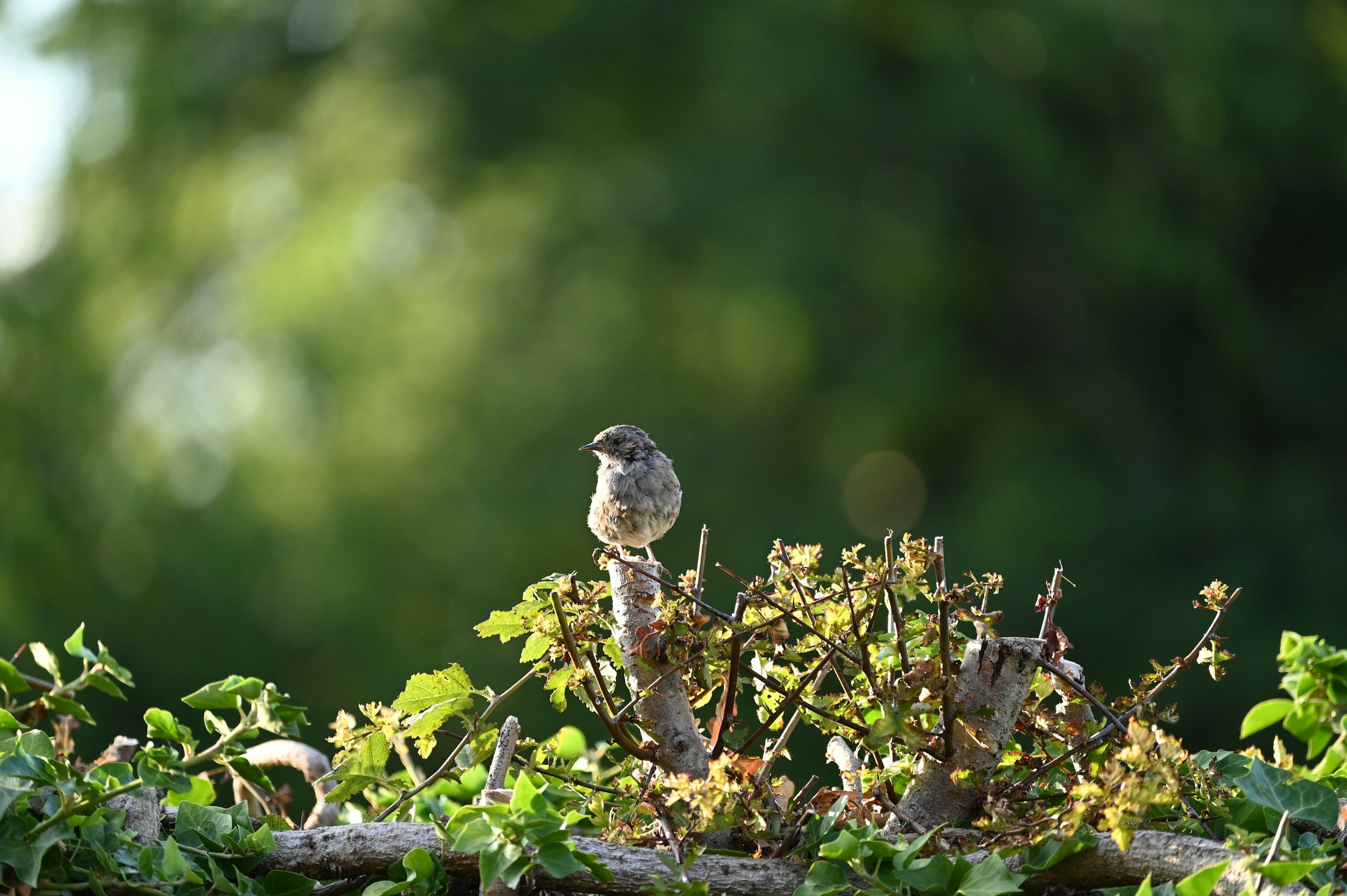
There's a version of this conversation that stops at "are we exempt, yes or no" — and there's a more useful one. Whether or not a project technically requires a biodiversity metric, the site it sits on, the hedgerows and trees it keeps or loses, and the way its grounds are treated afterward all shape how the building actually lives in its place for the next fifty years. Sustainability, done properly, was never really a compliance exercise — it's closer to a fundamental ethic than a feature to be ticked off. A garden thoughtfully re-planted, a hedgerow retained rather than cleared for site access, a drainage strategy that works with the land rather than against it: none of that needs a policy requirement to be worth doing well.
Frequently Asked Questions
Do I need Biodiversity Net Gain for a house extension?
No. Extensions to an existing single dwelling are almost always "householder applications," which are exempt from BNG, regardless of the August 2026 changes.
How big is 0.2 hectares, in practical terms?
About 2,000m², or roughly half an acre — broadly a third of the size of a football pitch. Most single plots (especially newer-builds) fall comfortably within this.
I'm self-building on a larger rural plot — am I still exempt?
Not automatically. The old self-build exemption (up to 0.5 hectares) was removed on 6 August 2026. If your plot exceeds 0.2 hectares, you may now need a full biodiversity net gain assessment where you previously wouldn't have.
My self-build application went in before August 2026 — which rules apply?
The rules in force at the date of application apply. Applications made before 6 August 2026 are assessed under the previous regime.
Does an exemption from BNG mean ecology doesn't matter for my project?
No. Protected species, tree protection, and local landscape policy still apply regardless of BNG status — and thoughtful site and landscape design remains one of the things that separates a good project from a merely compliant one.
If you're weighing up a plot, or want a clear read on how the current rules apply to a project you're considering, get in touch — it's a conversation worth having early, before a site is bought rather than after.