
Retrospective Planning Permission: Why 'Build First, Ask Later' Doesn't Work
Retrospective planning permission is not a safety net. In Jersey, as in almost every mature planning system, it is simply a route for applying for consent after work has started or finished, rather than before. Jersey's Planning Department has said as much in public terms: a retrospective application is assessed in the same way as any other, with no credit given for the fact that a building is already standing. The planning authority is under no obligation to grant one. If it refuses, enforcement action can follow — enforcement notices, stop notices, even a requirement to alter or remove what has been built. The mechanism exists. It was never designed to reward the gamble of building first and asking afterwards.
It's a theme this island keeps handing us, because few places make the real stakes of planning as visible as a small one does. This month it has handed us another example, worth using carefully, and without naming anyone involved, to understand what retrospective permission can and cannot do.
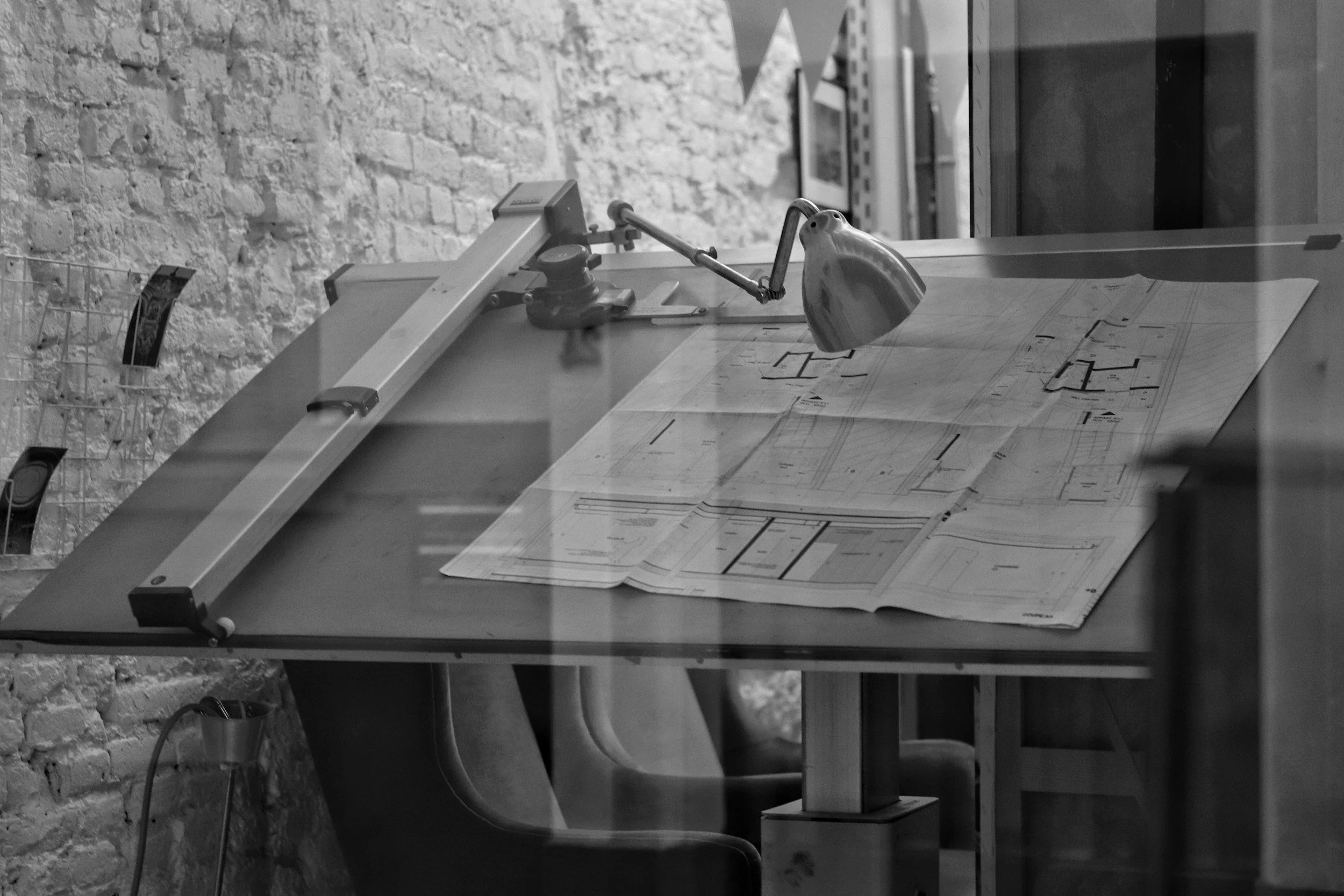
What Exactly Is Retrospective Planning Permission?
A retrospective application is, in essence, an ordinary planning application submitted at the wrong end of the process. Instead of describing what someone intends to build, it describes what has already been built, and asks the authority to grant, after the fact, the consent that should have preceded it. In Jersey it sits within the same legal framework as any other application — under the Planning and Building (Jersey) Law 2002 and the Planning and Building (General Development) (Jersey) Order 2011 — and is weighed against the same policies as any other: the Island Plan, context and character, impact on neighbours, scale, height, materials.
Two details reveal how the system actually regards this route. First, a retrospective application in Jersey costs double the standard fee — a quiet but deliberate disincentive, not a welcome mat. Second, officers are guided that whether development has already taken place is not usually a material planning consideration. In plain terms: building it first buys an applicant nothing procedurally. The application is read, as far as the policy test goes, as though the site were still a field.
Why Do People End Up Building Before They Have Permission?
Rarely is it bare defiance. More often it's a contractor booked months ahead who can't easily be paused; a construction detail that only reveals its true proportions once standing in block and timber, rather than lying flat on a drawing; or a late addition — a lift for accessibility, solar panels, a deeper roof to carry planting — that seems too minor, on its own, to interrupt the build for. Each of these can sound reasonable in isolation. None of them changes how the application is assessed once the work is done.
This is precisely why oversight through construction, not only at the drawing stage, matters so much on a project of any ambition. A design that is coordinated and checked on site as it rises, rather than assumed to match the approved drawings until somebody notices otherwise, is far less likely to drift into territory nobody actually agreed to.
Is Jersey's Planning Authority Obliged to Grant a Retrospective Application?
No. Refusal is a live, ordinary possibility, and the applicant carries the risk of having built on a permission they did not yet hold. If refused, an applicant can appeal under Article 108 of the 2002 Law. What nobody can appeal is a decision not to take enforcement action — no such right exists — and neighbours have no way to compel the department to act, only to object and be heard. Enforcement is, by design, discretionary; officers usually seek voluntary compliance first. But discretionary is not the same as toothless.
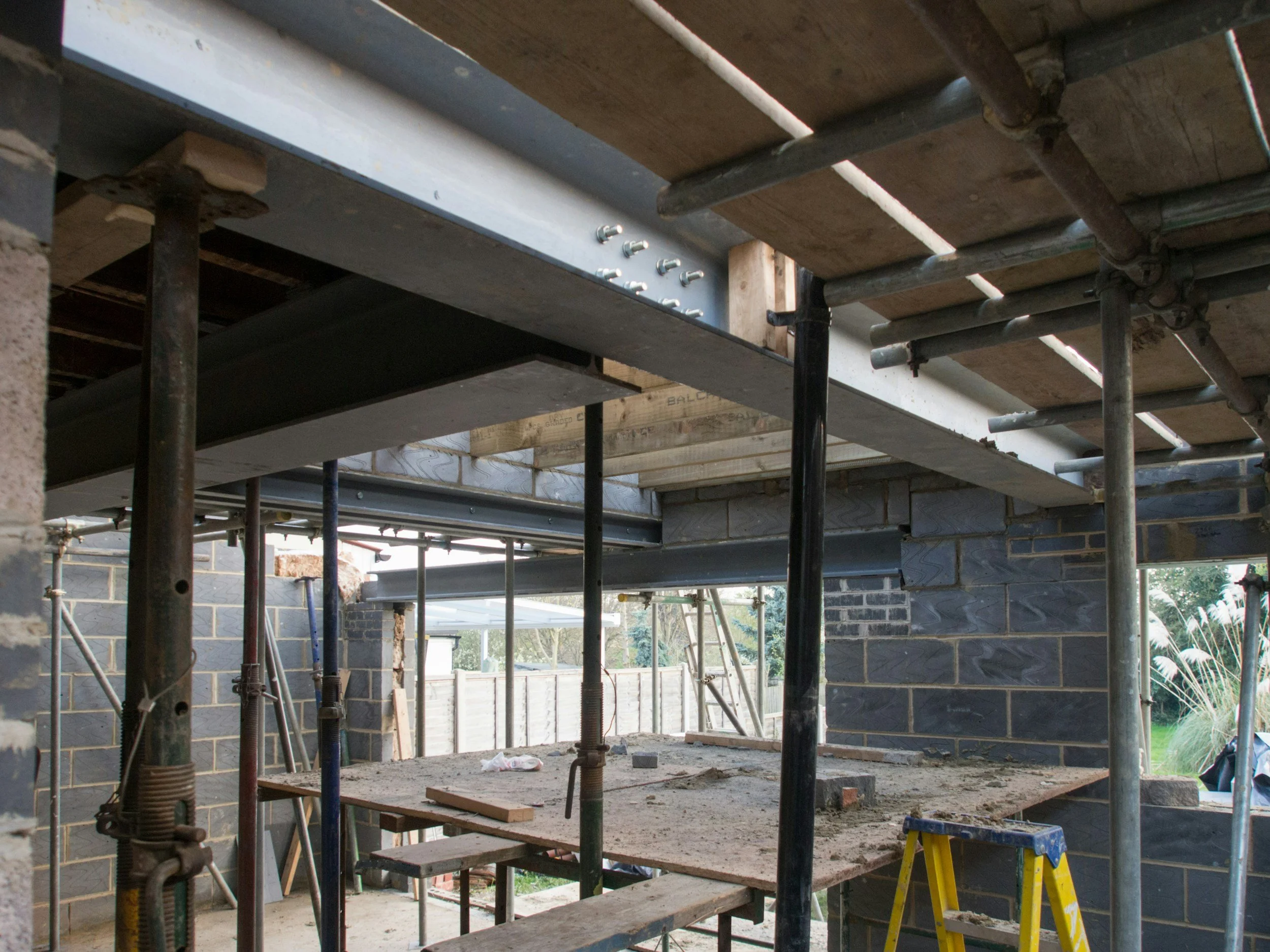
What Happens If the Application Is Refused?
If a retrospective application fails, Jersey's compliance team decides whether enforcement is warranted, weighing the harm caused against the circumstances. The toolkit is real: enforcement notices, stop notices, condition notices, injunctions and prosecution all sit within the department's powers, and failing to comply with a notice is itself a criminal offence under the law. Jersey's own public register of notices shows compliance periods running from "immediately" to several months. Enforcement here is not an abstract threat held in reserve; it's a process the Island actually uses.
What Does a Recent Case in Grouville Show Us?
Earlier this month, the Jersey Evening Post reported on resident anger in Grouville over a retrospective application for a house completed several feet taller than the permission granted back in December 2023 allowed. According to that reporting, the retrospective application set out a list of seven separate departures from what had originally been approved — changes framed around genuinely common, even sympathetic, reasons: accommodating a lift for accessibility, concealing rooftop solar equipment, deepening a roof to carry planting. Objectors argued, among other things, that approving changes after the fact risks normalising exactly that sequence, Island-wide — building first, and asking afterwards.
Within the week, the Planning Department issued a public clarification: retrospective applications, it said, are assessed on their merits like any other, construction already undertaken is not a material consideration, and this type of application makes up only a small share of the total submitted each year. Nothing in that statement was really new — it simply restated the principle this piece opened with — but the fact that it needed restating publicly tells its own story about how easily that principle gets lost once the bricks are already laid.
We're not here to adjudicate that particular case, which was still working through the process as this was written, or to guess at anyone's motives. What it illustrates, generally, is how little the "it's basically already done" argument weighs against a planning authority that has said, clearly, that it doesn't weigh it at all.
What Does "Build First, Ask Later" Really Cost?
Set against whatever time or money seems to be saved by not waiting for permission, the costs run the other way. There is the doubled application fee, and often the added cost of commissioning surveys and reports to support a case retrospectively, under time pressure, rather than calmly in advance. There is delay — a live enforcement question can complicate a sale, a mortgage, or an insurance renewal for as long as it stays open. There is the possibility of remedial work: altering or removing something already built is invariably more expensive than designing it correctly the first time, because by then an owner is paying for the same square metre twice. And on an island where parishes are small and reputations travel fast, there is a quieter cost that never appears on an invoice — the erosion of trust between a household, its neighbours and the authority that will, in all likelihood, assess that household's next application too.
A building is meant to outlast the dispute that produced it. But a structure whose legitimacy was contested at the point of construction tends to carry that history for longer than anyone expects at the outset — in the file at the Planning Department, in the memory of the street, and in the next conversation anyone has about building anything nearby.

How Do You Make Sure You Never Need One?
The honest answer is to treat planning consent as part of the design process, not an administrative step after the design is finished. In practice, that means a handful of disciplined habits: bringing a qualified designer in early enough to understand a site's sensitivities — height, coastal context, neighbouring outlook, the relevant Island Plan policies — before a scheme is fixed; using pre-application engagement to surface contentious issues while they're still cheap to resolve; treating the approved drawings as a commitment to the people around the site, so any change found on site — a structural necessity, a swapped product, a small-seeming addition — triggers a conversation about whether an amendment is needed before building, not after; and keeping proper oversight through construction, so drift between drawing and reality is caught in its first week, not its last.
This is, in the end, a question of sequence. Survey, design, consent, construction, in that order, every time, is slower in the short run and considerably faster in every way that matters over the life of a building. It's also the only sequence that treats a planning authority, a set of neighbours and a landscape as parties whose agreement is worth having before you build, rather than something to be managed afterward.
Frequently Asked Questions
Is retrospective planning permission the same as "getting away with it"?
No. It is a formal application, assessed against the same policies as any other, with no allowance made for the fact that construction is already complete. It can be refused, and a refusal can lead directly to enforcement action.
How much does a retrospective planning application cost in Jersey?
The application fee itself is double the standard rate. Beyond that, applicants typically face the cost of commissioning supporting surveys or reports under time pressure, and — if the application is refused — the far greater cost of remedial works.
Can Jersey's Planning Department really make me alter or remove something I've already built?
Yes. Where a retrospective application is refused, or where unauthorised work is identified without one being submitted, the department can issue enforcement notices and stop notices requiring alteration or removal, and failing to comply with those notices is itself an offence under Jersey law.
Does submitting a retrospective application mean I've broken planning law?
Not necessarily in a formal sense — the application itself is a lawful route to seek consent. But if the underlying work exceeded or departed from an existing permission, or had none at all, that is the breach the application is attempting to resolve, and the outcome is never guaranteed.
What should I do if I think my build has already gone beyond what was approved?
Raise it with your designer and, if needed, the Planning Department proactively, rather than waiting to be found out. A prompt, well-prepared, honestly framed application submitted because you noticed is treated very differently in practice from one submitted under pressure after a neighbour's objection.
Good planning permission is not an obstacle on the way to a good building; it is one of the ways a good building proves, before it exists, that it has thought carefully about the place it's about to occupy. That proof is worth far more sought in advance than assembled afterward — in Grouville, or anywhere else.