
Paragraph 84: Building an Exceptional Home in the Countryside
Paragraph 84 is the well-known name for the clause in national planning policy that allows a single new home to be built on an isolated plot in open countryside — land where a council would ordinarily refuse a new dwelling outright — provided its design is judged truly exceptional. Since 17 August 2026 it has formally been Policy HO11, following a wholesale renumbering of the Framework, though the design test at its heart is unchanged. It is not a loophole, and it is not a formality. The design has to be good enough to justify building somewhere policy exists specifically to protect. For a client set on one ambitious, singular home in a landscape they love, it is one of the only genuine routes onto an open plot, and it rewards patience and design quality above almost anything else in planning law.
This is the post we promised to write this week: not a general guide to rural planning, but a close look at what this clause actually asks for, what has changed recently, and why it so rarely goes to plan for the people who chase it without the right team around them.
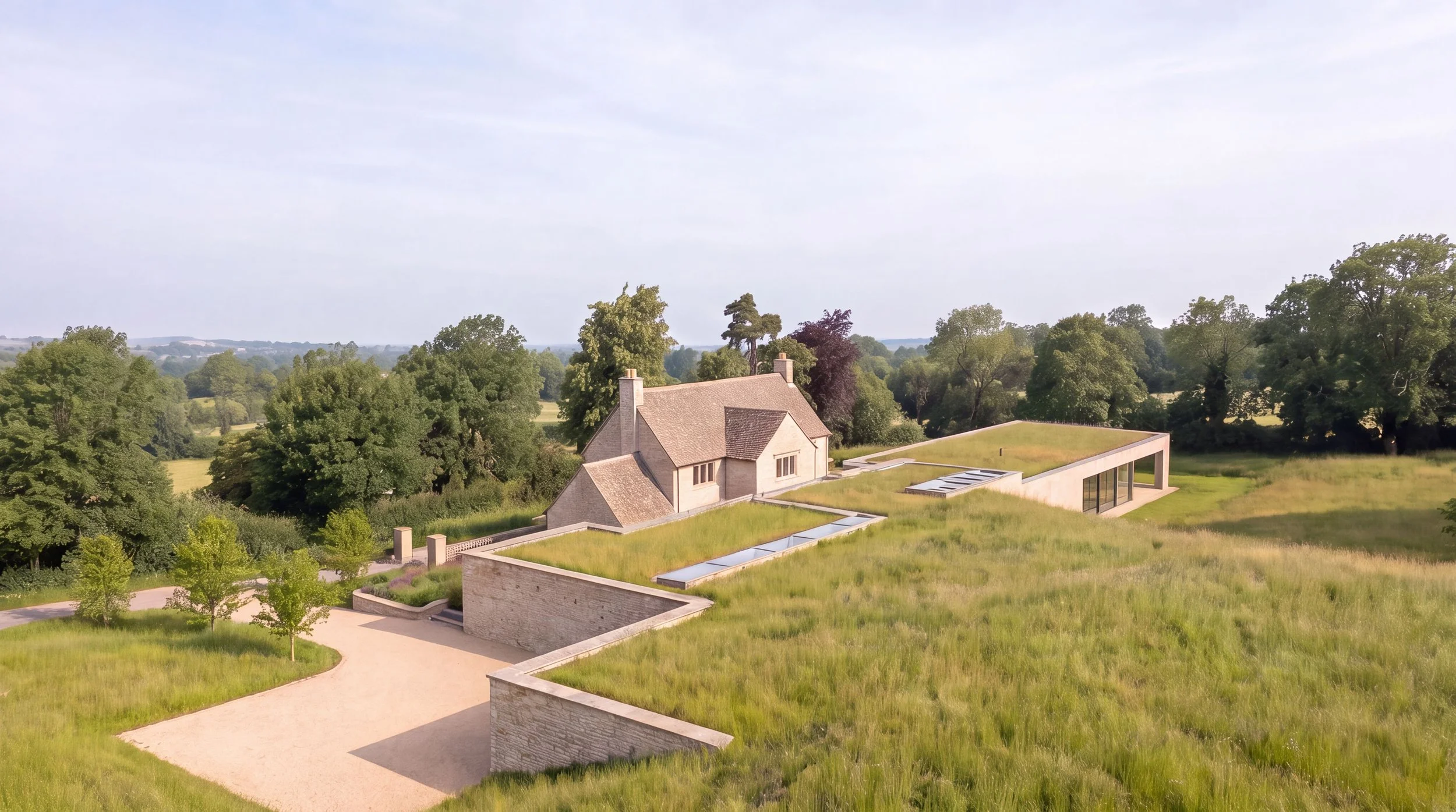
What is “Paragraph 84”, and what does it allow?
Ordinarily, national planning policy protects the countryside from isolated new housing. A plot with a beautiful view and no development history is, in most cases, simply not a plot you can build a house on. This clause is the narrow, deliberate exception: it allows planning permission to be granted for a new isolated home in the countryside where the design is of genuinely exceptional quality, and where it would significantly enhance its surroundings rather than merely sit within them.
The clause has existed in some form since the mid-1990s, and planning professionals still sometimes call it "the Gummer clause," after John Gummer, the Secretary of State who introduced the original countryside exception in 1997. Its number has moved every time the Framework has been rewritten and reorganised — it was paragraph 55, then 79, then 80, then 84 — and, most recently, a full restructuring of the NPPF that took effect on 17 August 2026 replaced narrative paragraph numbers with named policies across the board, moving this clause to Policy HO11. The label keeps changing; the underlying principle, that a home this good is allowed to justify its own existence, has not. We’ve headed this blog as "Paragraph 84" because that’s still how almost everyone searches for and talks about this policy — much as some in the industry still call it the Gummer clause, thirty years on — but HO11 is the number to actually cite in a live application today.
What actually counts as "exceptional"?
This is where most enquiries about Paragraph 84 come from, and where most ambition quietly meets its limit. The Framework does not leave "exceptional" to interpretation. A design has to satisfy every part of a specific, four-part test. It must:
- be truly outstanding, reflecting the highest standards of architecture;
- help raise the standard of design more generally in rural areas;
- significantly enhance its immediate setting; and
- be sensitive to the defining characteristics of the local area.
Read quickly, that can sound like the sort of language every planning statement claims for itself. Read carefully, it is a much higher bar. "Truly outstanding" is doing real work in that sentence — this is not a test of competence, or of good taste, or even of considerable cost. It is a test of whether a scheme genuinely raises the standard of what rural architecture in England is capable of. Councils, planning inspectors and, eventually, the courts have all leaned on that word deliberately, and refusals for schemes that are merely "very good" are common.
The fourth test is worth sitting with too, because it catches people out. A design does not pass Paragraph 84 by minimising its impact — building small, tucking behind a hedge line, screening itself from view. Reducing harm is not the same as delivering enhancement. The test asks what the building adds to the setting, not merely what it avoids taking away. A scheme has to earn its place in the landscape, not apologise for being there.
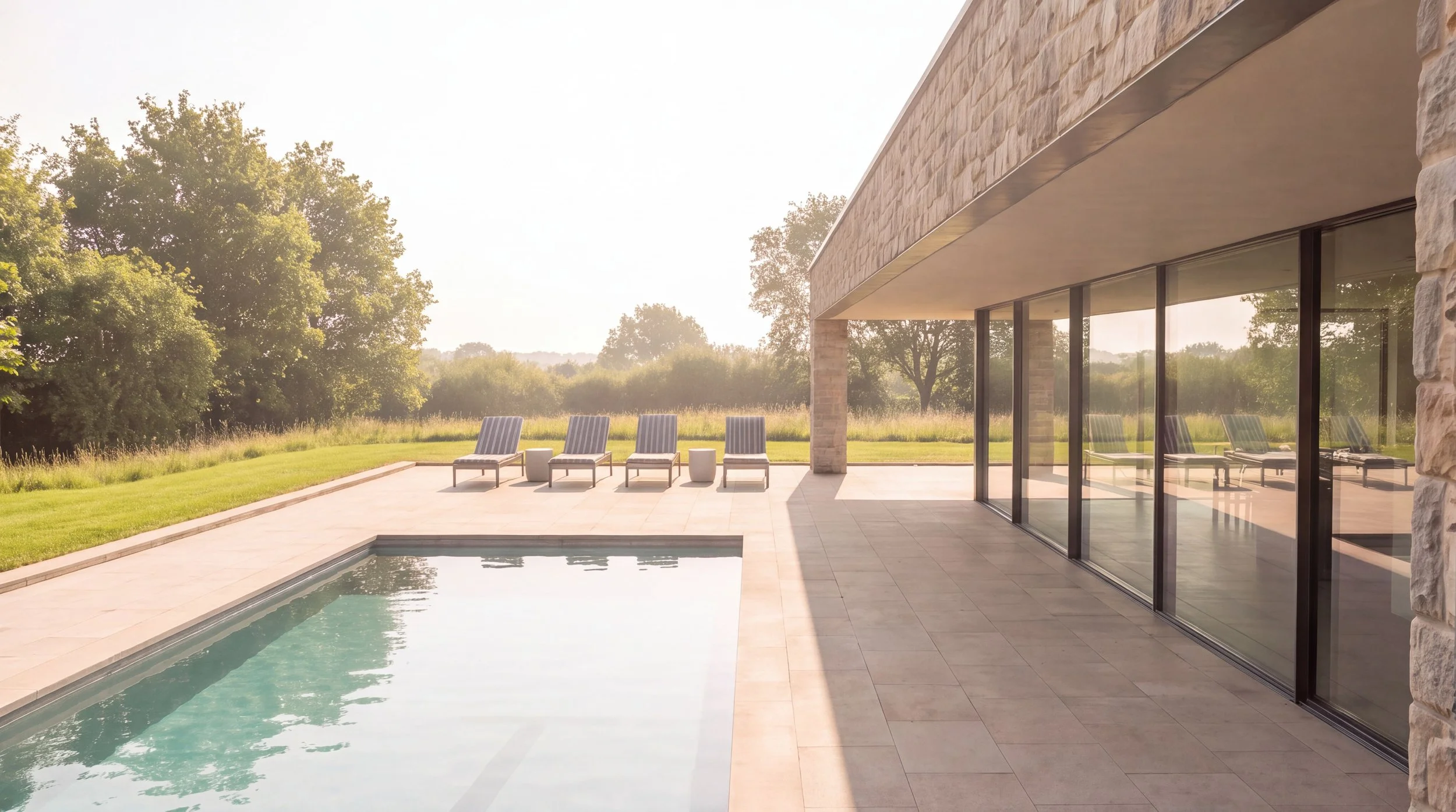
What has changed recently?
One meaningful change is worth knowing if you are working from an older article or a planning statement written a few years ago: the word "innovative" has been dropped from the test. Earlier versions of this policy allowed a design to succeed by being "truly outstanding or innovative" — offering, in theory, two different routes to the same conclusion. Recent revisions to the Framework removed that second route. Innovation for its own sake is no longer enough on its own; a design now has to clear the "truly outstanding" bar directly; novelty without quality does not count, and quality without novelty can still succeed.
In practice, this tightens rather than loosens the test, and it puts more weight on how convincingly a design responds to where it actually stands. It rewards a scheme that reads as though it could only belong on that particular plot, over one that simply looks striking in isolation.
The other change, just weeks old at time of writing, is the move to Policy HO11 itself. Beyond the renumbering, at least one specialist planning source suggests the definition of what counts as "isolated" — homes lying outside settlements or groups of houses, rather than simply outside a settlement boundary — has been clarified as part of the same rewrite, though the core four-part design test appears to carry over largely as before. This is a live, fast-moving area of policy, only weeks into a wholesale rewrite of the Framework, and anyone weighing up a plot should get a current, specific reading rather than relying on anything written more than a few months ago, this article included.
Why do so few applications actually succeed?
Because the bar described above is deliberately, genuinely high, and it is a design bar first, not a planning-process bar. A well-run application, a thorough heritage and landscape assessment, and a sympathetic planning consultant can all help a scheme reach a decision-maker in good order. None of it substitutes for the building itself being extraordinary. Most of the schemes that fail under Paragraph 84 do so not because the paperwork was wrong, but because the design was asked to do something it was never capable of doing: to be the sole justification for building where nothing should otherwise be built.
This is also why Paragraph 84 rewards patience over speed. The strongest schemes tend to come from a design process that starts with the land, not the brief: understanding the site's history, its materials, its light, its relationship to the wider landscape, long before a floor plan exists. A house that is exceptional almost always looks, in hindsight, inevitable, as though the landscape had been quietly waiting for it. That is not a quick thing to arrive at.
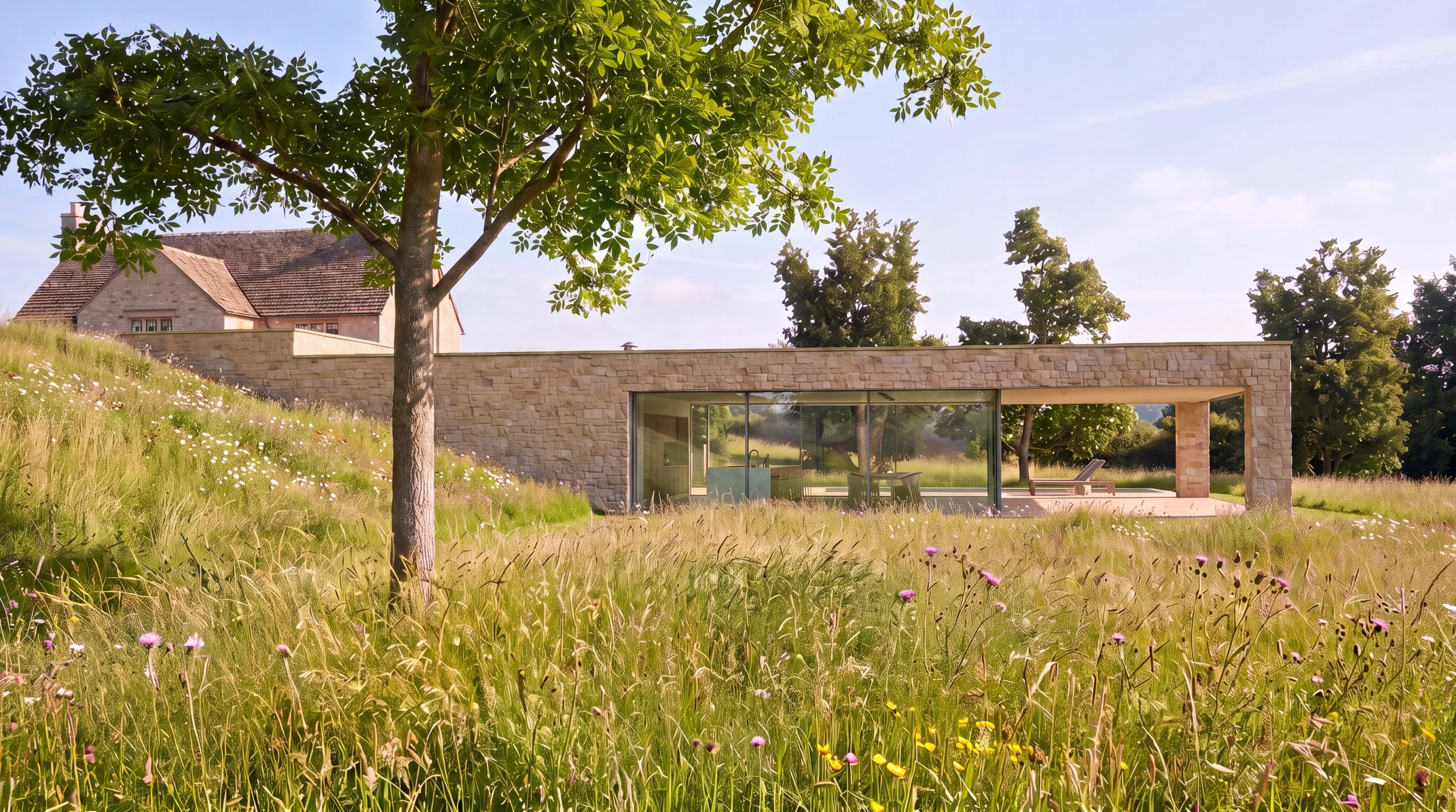
How we think about a Paragraph 84 project
We treat a Paragraph 84 site as a conversation with a specific place, not a blank canvas. The question we start from is not "what could we build here," but "what does this particular piece of land deserve." That is a slower question, and a harder one, but it is the only one the policy itself is really asking. Sustainable, fabric-first design and a genuine reading of the local vernacular tend to sit very close together in practice: a home built to last generations, using materials and forms that belong to their setting, is usually also the home most likely to satisfy a planning inspector that it enhances rather than intrudes.
If you own, or are considering, a plot you believe deserves this kind of ambition, the right first step is an honest conversation about whether the site and the opportunity genuinely support a Paragraph 84 case, before any design work begins.
Frequently asked questions
Is it still called "Paragraph 84"?
Informally, yes, and probably will be for years — the industry kept saying "the Gummer clause" long after that name stopped being technically accurate, and something similar is already happening here. Formally, since 17 August 2026 it is Policy HO11, following a rewrite that replaced the NPPF's old narrative paragraph numbers with named policies throughout. Any planning statement or application drafted from now on should cite HO11, not paragraph 84.
Does Paragraph 84 apply inside National Parks or the Green Belt?
Land within a National Park, an area of the Peak District included, carries its own additional layer of policy protection, on top of the normal countryside protections Paragraph 84 is written to override. A Paragraph 84 case is not automatically ruled out inside a National Park, but it has to satisfy that extra layer as well as the four design tests, which makes an already high bar higher still. Green Belt land raises a separate and distinct set of tests. Either situation needs a specific, current assessment rather than a general answer, ideally from a planning consultant who knows the local authority's own track record with these cases.
How long does a Paragraph 84 application typically take?
Considerably longer than a standard householder or minor development application. Between pre-application advice, a thorough design and site analysis, and often at least one committee-level decision, a realistic timeline runs to many months, sometimes over a year, before permission is secured. Schemes that try to shortcut this process are, anecdotally, among the most common to be refused.
Is Paragraph 84 the same as a Rural Exception Site?
No, and the two are worth telling apart. Rural exception sites are a separate mechanism aimed at delivering affordable housing to meet a proven local need, judged on housing need rather than design quality. Paragraph 84 is judged almost entirely on the quality and setting-sensitivity of the design itself. They sit in the same part of the Framework but answer different questions.
Can an existing barn or agricultural building be converted under Paragraph 84?
Paragraph 84 is specifically about new, isolated homes, not conversions. Converting an existing rural building is usually a different planning route entirely, sometimes a more straightforward one, and is worth exploring as an alternative if a new-build case looks marginal.
What kind of design team does a Paragraph 84 project need?
Given how much of the decision rests on demonstrating design quality, this is a case where early, close collaboration between the client and their design team matters more than on almost any other project type, alongside planning and landscape input appropriate to the site. It is rarely the right project to start with a fixed brief and a quick sketch.