
Biophilic Design: Why Nature-Led Homes Aren't Just a Trend
Biophilic design is the practice of shaping a building around humans' evolved need to stay connected to the natural world — daylight, natural materials, views out, air, growth, weather — rather than around decoration alone. It has a genuine, decades-deep research basis, which is worth knowing, because the same term is now used almost as often to describe a few potted plants in a marketing render. Both things are true at once: the underlying idea is one of the better-evidenced arguments in contemporary architecture, and the word itself has been stretched thin enough that it's worth knowing what's actually being claimed before you believe it.
This is the piece we wanted to write about 2026's residential trend coverage, almost all of which mentions biophilic and wellness-led design somewhere near the top. Rather than adding another list of nature-inspired ideas, we wanted to ask a more useful question: which parts of this are real, and what does taking it seriously actually change about how a home gets designed.
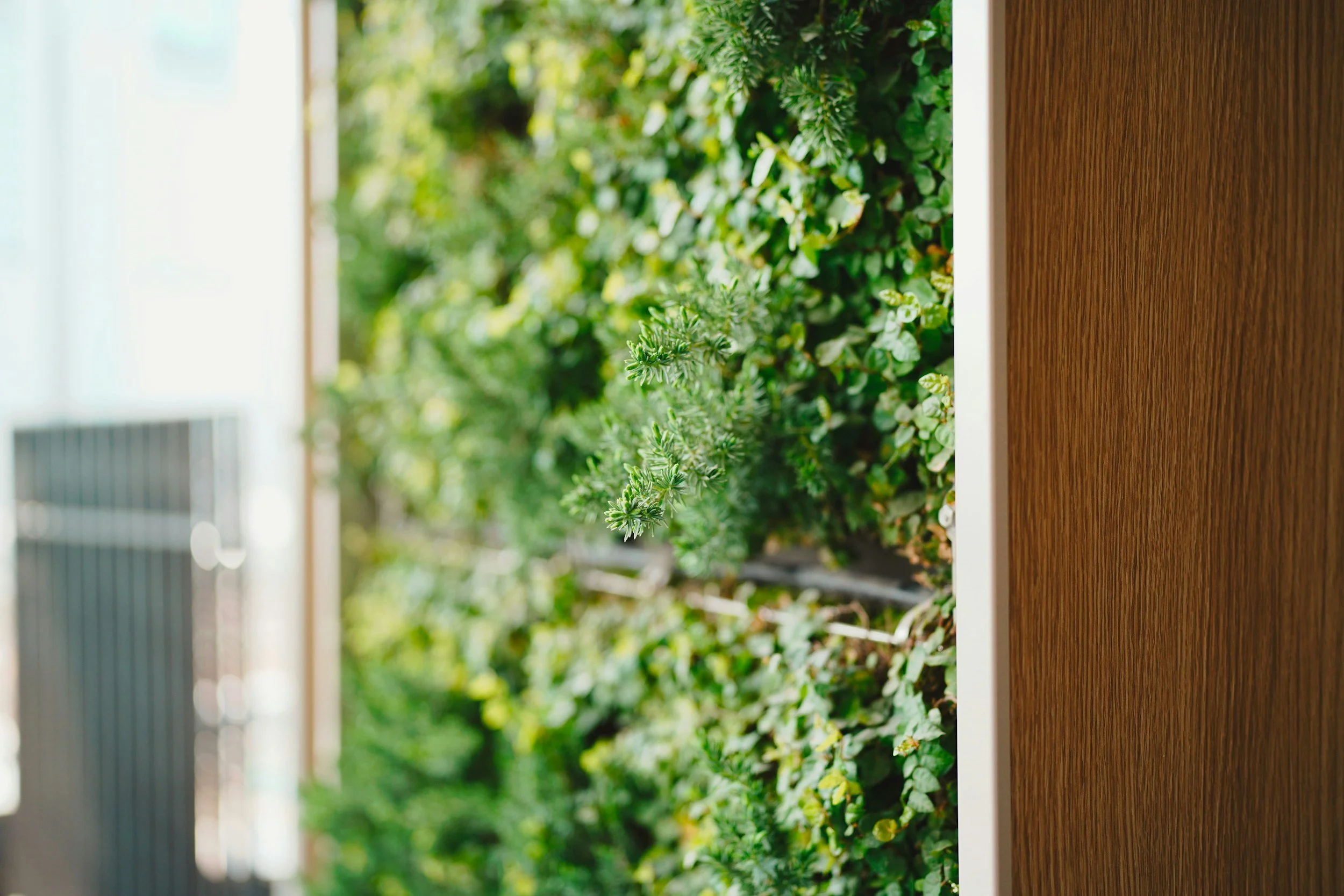
What is biophilic design, actually?
The idea traces back to the biologist E. O. Wilson's 1984 book Biophilia, which argued humans carry an innate, evolved tendency to seek connection with living systems — a consequence of having spent nearly all of our evolutionary history embedded in nature, not separated from it by walls. It stayed largely theoretical until the landscape architect and social ecologist Stephen Kellert spent much of the following three decades translating it into something a designer could actually use: a structured set of design attributes, published most fully in his 2015 framework, organised into direct experience of nature (light, air, water, plants, weather, view), indirect experience of nature (natural materials, natural forms and patterns, the patina that comes with age), and the experience of space itself (shelter and outlook, a sense of complexity, a considered threshold between one space and the next). That three-part structure, more than any single design trick, is the actual substance behind the word.
Does the research really hold up?
In places, robustly. A landmark 1984 study found hospital patients recovering from surgery in rooms with a view of trees left hospital sooner, needed less pain medication, and were recorded by nursing staff as coping better than patients whose rooms faced a brick wall — a small, older study, but a genuinely real and frequently replicated finding in spirit since. Considerably larger evidence comes from population-level research: a 2018 meta-analysis pooling well over a hundred studies found consistent associations between exposure to green space and lower stress hormones, lower blood pressure, and reduced risk of cardiovascular disease and premature death. A 2019 study of nearly 20,000 people found that spending at least two hours a week in nature — in any form, accumulated however it suited people's lives — was associated with meaningfully better self-reported health and wellbeing, with the benefit levelling off beyond about three to five hours. None of that is marketing. It's public health research that happens to have obvious implications for how we design the buildings people spend most of their lives inside.
Other claims travelling under the same banner don't hold up nearly as well, and we think it matters to say so plainly. The frequently repeated claim that houseplants meaningfully purify indoor air, for instance, traces back to a NASA-era study from the 1980s and has since been re-examined properly: a real building, at real room scale, would need somewhere between ten and a thousand plants per square metre of floor area to match the air-cleaning already being done by ordinary ventilation. A well-known small study on forest walks and immune markers involved twelve people. Tellingly, some of the sharpest critiques of this gap between evidence and marketing come from within the field itself — the group behind biophilic design's most-used practical framework has warned openly against what they call the field's own "ironic greenwashing," urging designers toward real post-occupancy evidence rather than good photographs and an appealing word.
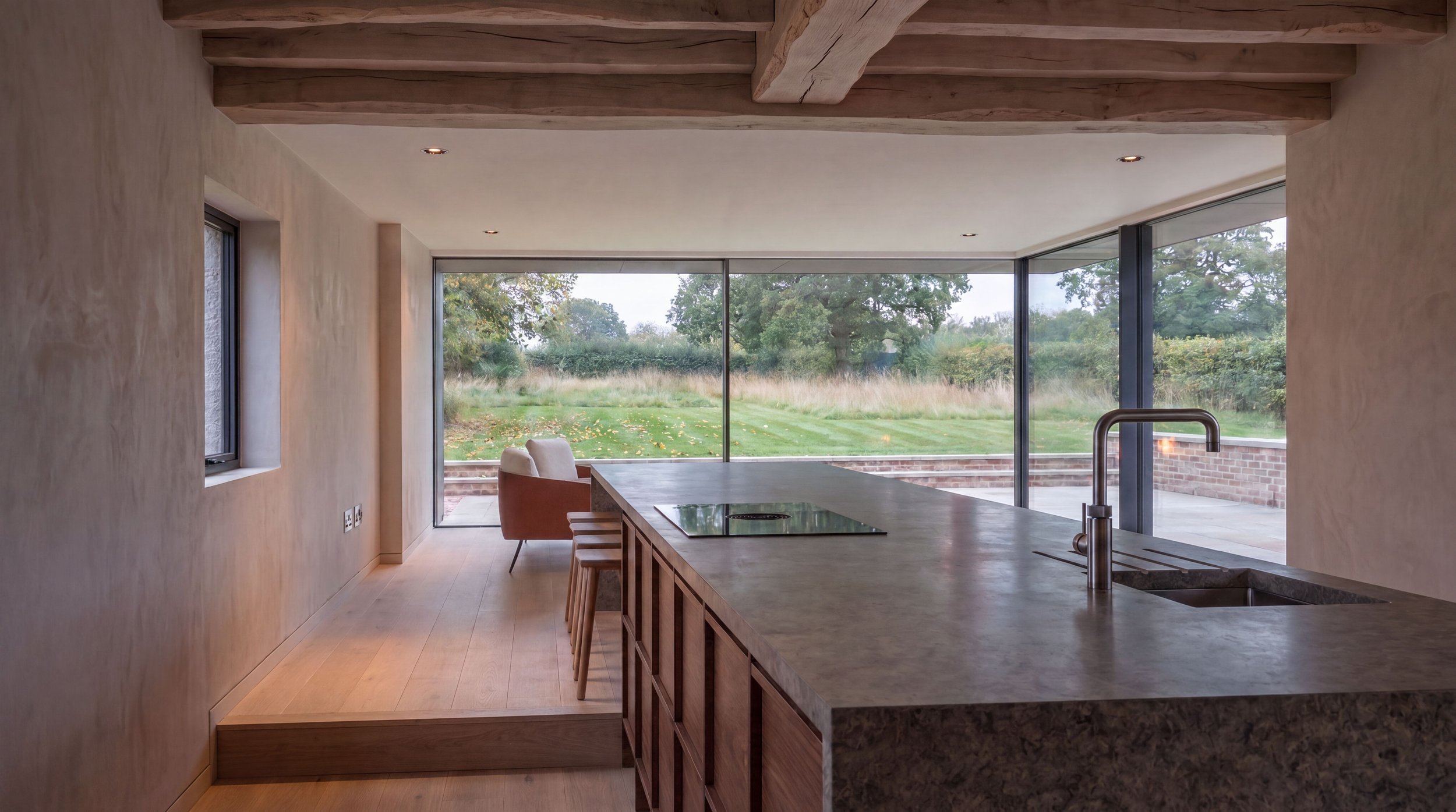
Is "biophilic" just this decade's word for good design?
Largely, yes — and we don't think that's a criticism of the idea, just an honest observation about the label. Look at the projects currently being celebrated as the best of British residential architecture and you'll find the underlying principles everywhere, rarely described using the term at all: a house built from stone quarried near enough to match the bedrock it sits on, a home dug into a clifftop so the landscape reads as continuous rather than interrupted, rooms organised around where the light actually falls through the day rather than around a floor plan drawn without reference to it. Call that biophilic design if the word is useful. We'd also simply call it good architecture, practised by people who understood the site before they understood the brief — which is, not coincidentally, the same instinct behind everything we've written about designing for the Peak District's own landscape and light.
What does this actually look like in a well-designed home?
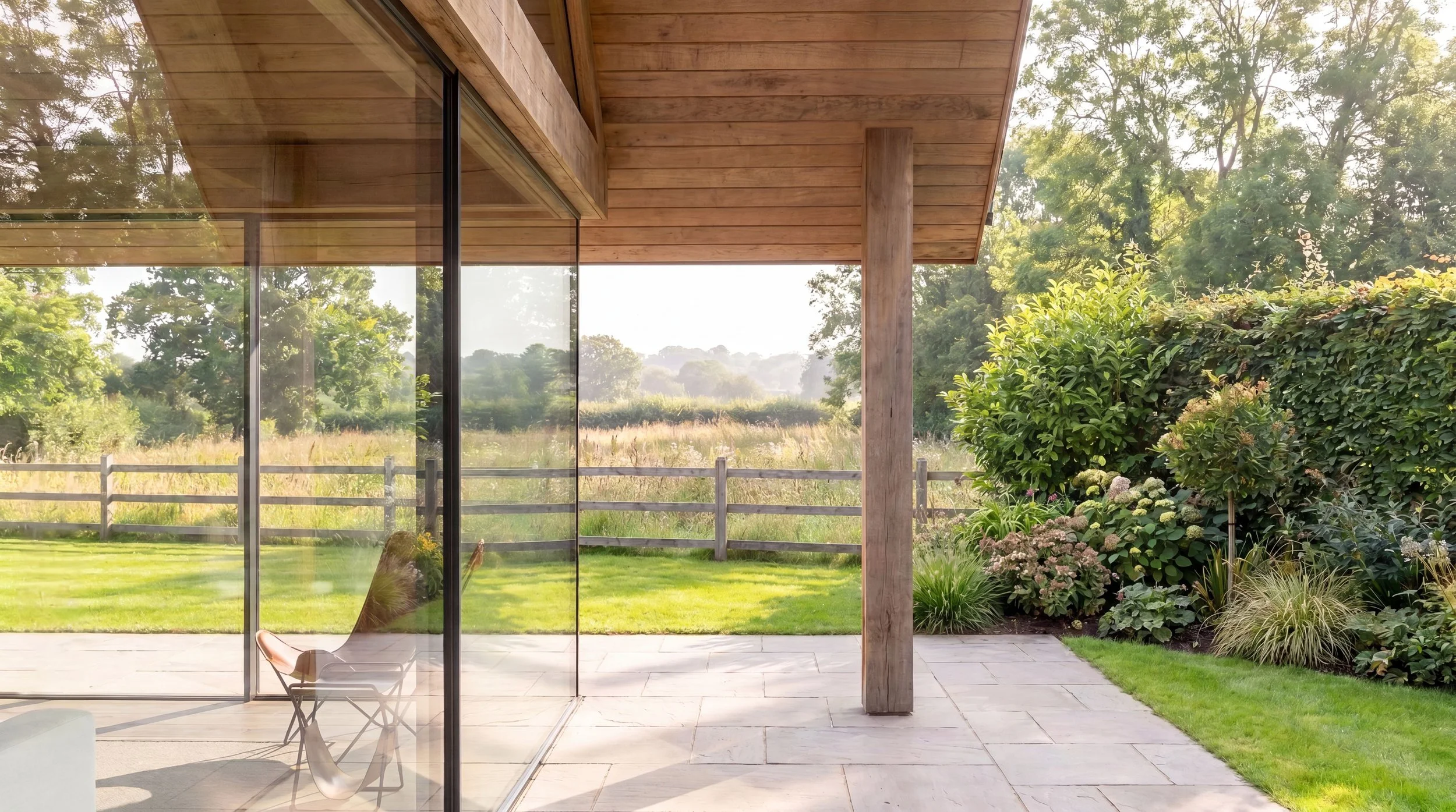
Kellert's three categories translate into fairly concrete decisions, not abstract atmosphere. Direct experience of nature means daylight and view treated as design drivers from the earliest sketch, not corrected for afterwards — window placement that follows how a room is actually used through the day, and a genuine, walkable connection between inside and garden rather than a single set of doors. Indirect experience means choosing materials for what they actually are rather than what they're made to resemble — timber, stone, lime render, materials that age visibly and are better for it, rather than finishes designed to look permanently new. The experience of space and place is the least talked-about of the three and arguably the most important: rooms that offer both shelter and outlook, quieter transitional spaces between one part of a home and the next, and enough considered complexity that a house rewards attention rather than exhausting it in one glance.
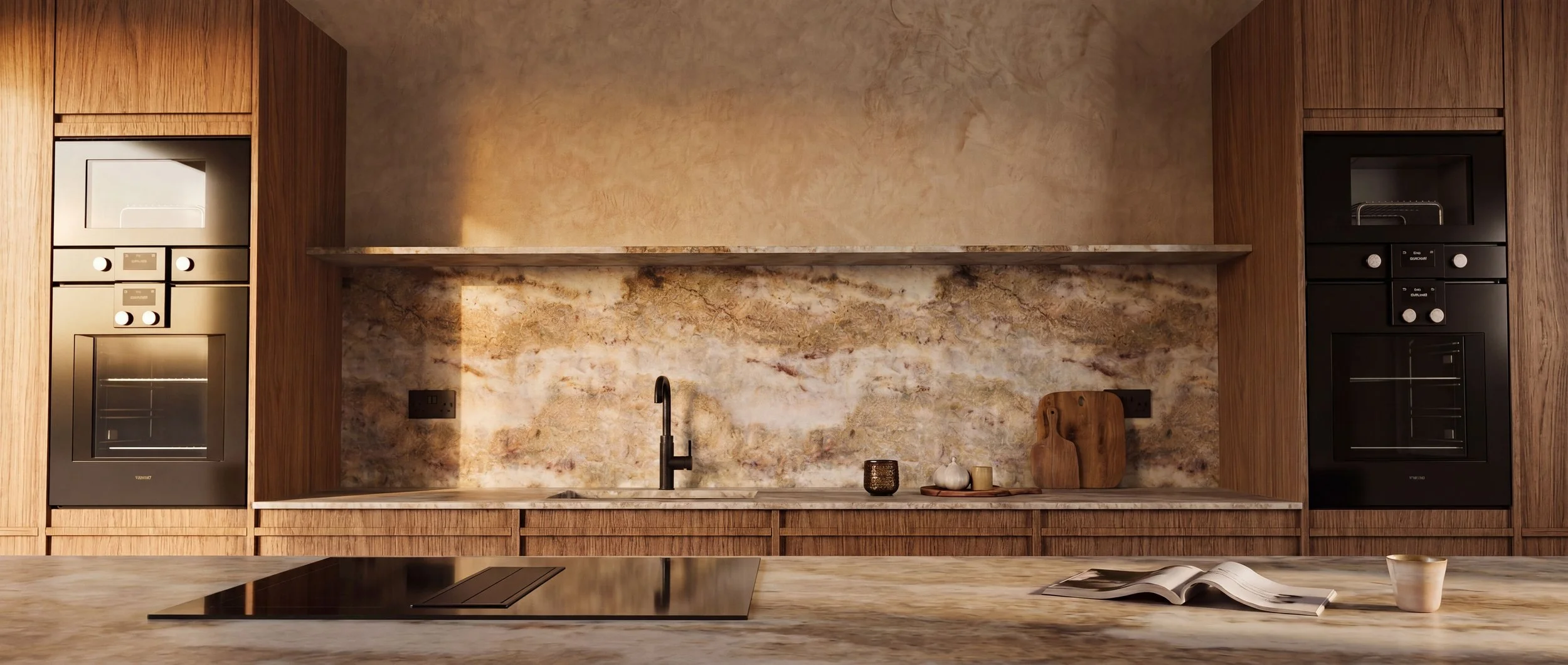
How is this different from just adding plants?
Because it starts with the building's relationship to light, material and setting, rather than with what gets added to a finished room afterwards. A large houseplant in an internal corridor with no natural light isn't biophilic design; it's decoration borrowing the word. A window seat positioned exactly where morning light lands, in a room framed by timber that will silver over twenty years, in a house whose plan follows the fall of the site rather than fighting it — that's the actual substance, and it's worth noticing that none of it requires a single plant to achieve. Wellness architecture, done honestly, is closer to a discipline of attention than a shopping list.
Frequently asked questions
Is biophilic design more expensive than conventional design?
Not inherently. Many of its core moves — orienting a plan around daylight, choosing durable natural materials, designing a genuine indoor-outdoor connection — are decisions made early and cost little or nothing extra to specify correctly. What tends to cost more is trying to add these qualities retrospectively to a design that wasn't conceived with them in mind.
Does biophilic design require a large garden or rural setting?
No. The same principles — light, material honesty, a considered relationship between inside and out — apply as much to a considered urban courtyard as to an open countryside plot. The scale changes; the underlying thinking doesn't.
Is there an official certification for biophilic or wellness design?
The WELL Building Standard, run by the International WELL Building Institute, is the best-known certification covering health and wellbeing in buildings, including a residential track. It's worth understanding as a broader framework — covering air quality, water, movement and more — of which biophilic design is one contributing element, not a certification for biophilic design specifically.
Are natural materials always better for wellbeing than synthetic ones?
Generally well-supported for indoor air quality and a documented sense of comfort, though "natural" isn't automatically better in every respect — durability, maintenance and genuine environmental impact all matter too, and a good design team should be weighing all of them together rather than treating "natural" as a rule that overrides everything else.
How do I know if a design is genuinely biophilic or just using the word?
Ask what it's actually doing about daylight, material choice and the relationship between inside and outside, at the level of the plan and the section — not the finishes list. If the answer is a mood board of ferns, be sceptical.